The Westminster Confession of Faith: A Guide for Reformed Christians
What Is the Westminster Confession?
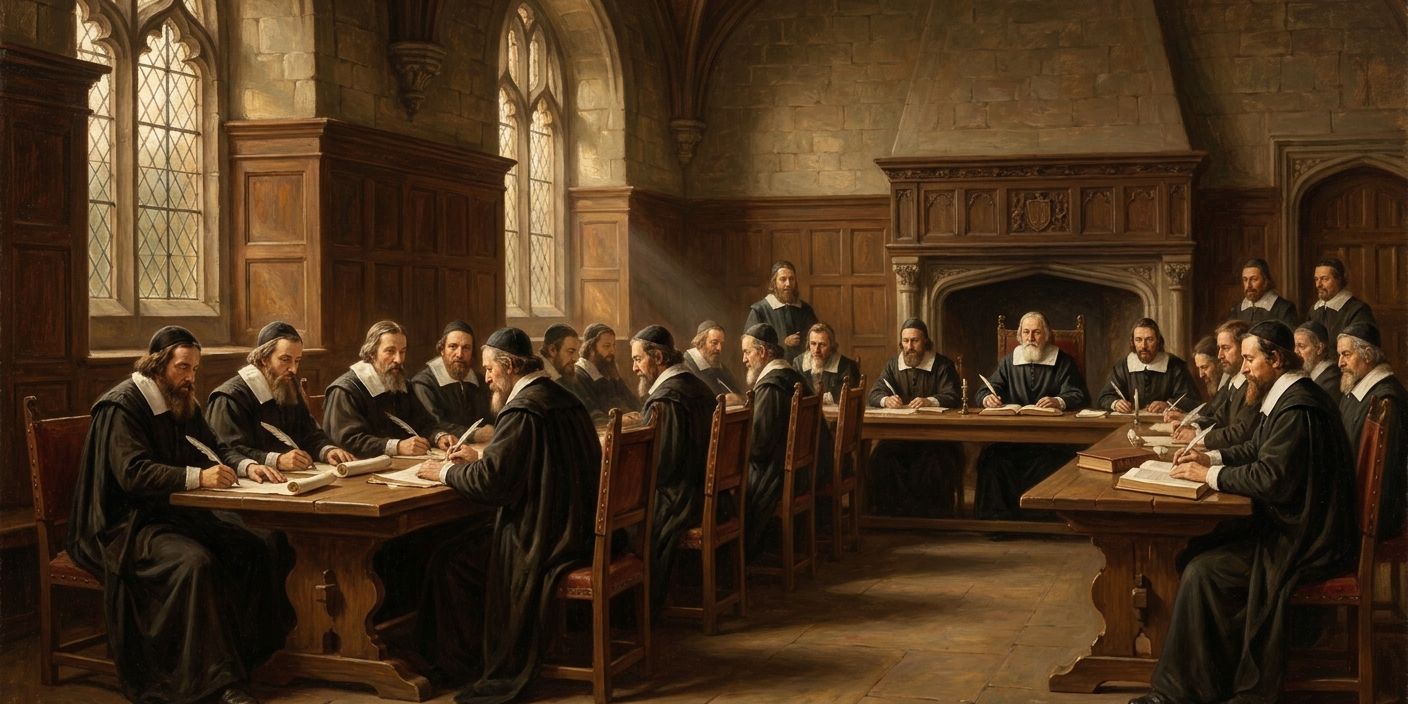
The Westminster Confession of Faith was drafted between 1643 and 1646 by an assembly of theologians and ministers convened by the English Parliament. Intended to reform the Church of England along Reformed and Presbyterian lines, it became foundational for Presbyterian and Reformed churches around the world.
The Structure of the Confession
The Confession covers thirty-three chapters, moving from Scripture and God's nature to creation, fall, redemption, the church, and last things. Each chapter is grounded in extensive Scripture proofs. It is not a devotional document — it is a careful, systematic account of what Scripture teaches.
Key Doctrines Affirmed
The Confession affirms the full inspiration and authority of Scripture, the doctrine of the Trinity, election and predestination, justification by faith alone, the covenant of grace, the two sacraments (baptism and the Lord's Supper), and the church's authority. It lays out a thorough Reformed soteriology.
The Westminster Standards
Alongside the Confession, the Assembly produced the Larger and Shorter Catechisms, together called the Westminster Standards. The Shorter Catechism — with its famous opening: "What is the chief end of man? To glorify God and enjoy him forever" — has been memorized by millions of Christians.
Still in Use Today
Presbyterian and Reformed denominations across the globe still use the Westminster Confession as their confessional standard. It represents some of the most rigorous theological work in Protestant history.
Read the Full Confession
Explore the Westminster Confession of Faith at WestminsterConfession.net and the broader Reformed confessional tradition at ConfessionsOfFaith.com.