The Scots Confession of 1560: John Knox and the Scottish Reformation
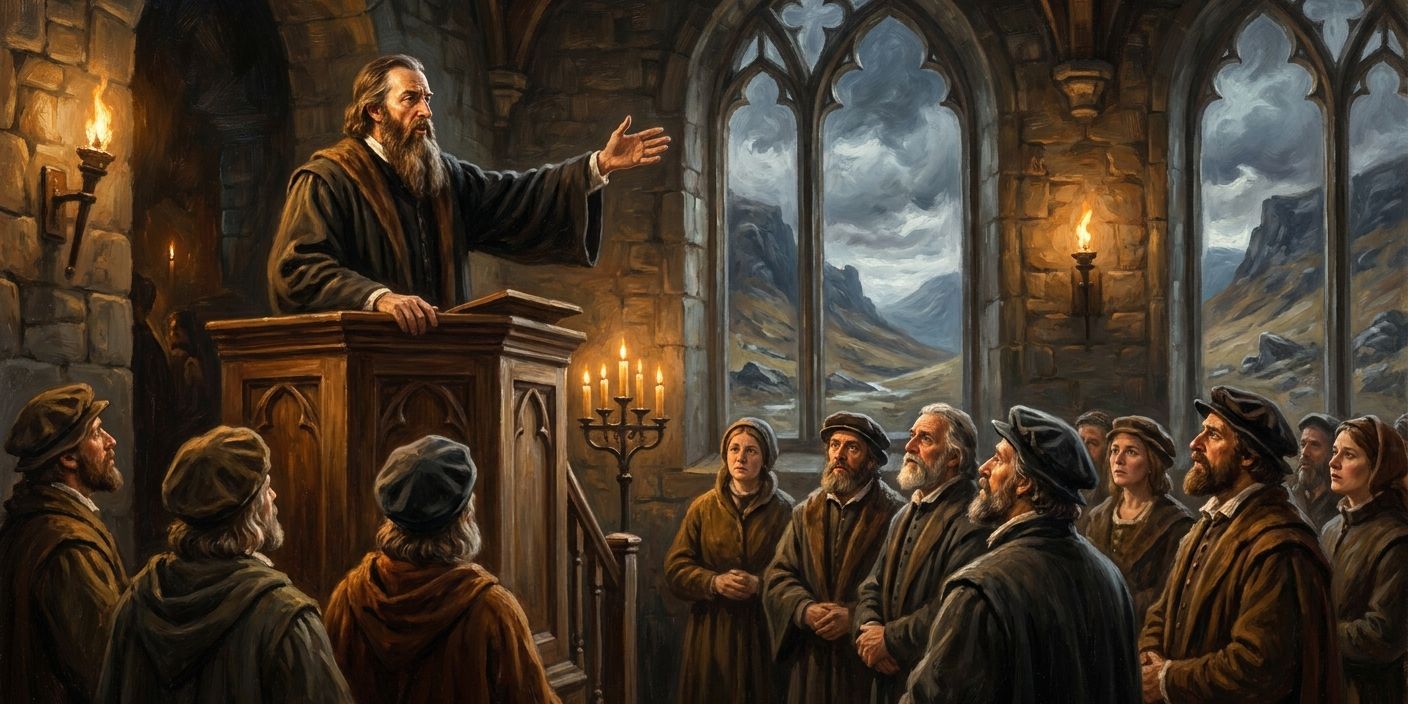
Of all the Reformation confessions, the Scots Confession of 1560 stands out for the passion and urgency of its language. Written in just four days by John Knox and five colleagues — all named John, a fact that has delighted historians ever since — it was adopted by the Scottish Parliament in August 1560, marking the formal beginning of the Reformed Church of Scotland.
The Context of the Scottish Reformation
The Scottish Reformation was in many ways more radical and more politically fraught than its English counterpart. Scotland in 1560 was a country where the Protestant faith had been spreading rapidly despite fierce opposition from the Catholic establishment and the French-influenced regency government. Knox himself had spent time as a galley slave and years in exile in Geneva, where he came under the direct influence of John Calvin.
When the opportunity came to formally establish the Reformation in Scotland, Knox and his colleagues seized it. The Scots Confession was the theological foundation on which the new church would be built.
The Character of the Confession
What strikes the modern reader most about the Scots Confession is its tone. It reads not like a legal document but like a proclamation — fierce, confident, and at times lyrical. Knox and his colleagues were not writing for posterity; they were writing for their moment, in the heat of a theological and political revolution.
The Confession covers the standard loci of Reformed theology — Scripture, God, the fall, election, Christ, the church, the sacraments — but with a directness and vehemence that sets it apart from more measured documents like the Westminster Confession.
Its Place in History
The Scots Confession was eventually superseded by the Westminster Confession of Faith in 1647, when the Scottish church formally adopted the Westminster Standards as their confessional standard. But it retains its place in history as the founding document of Reformed Christianity in Scotland — and as a monument to the courage of the men who wrote it.
Reading it today is an exercise in recovering the spirit of the Reformation: a willingness to declare, clearly and without apology, what God has said in his Word.