How the Reformation Produced a Wave of Confessions
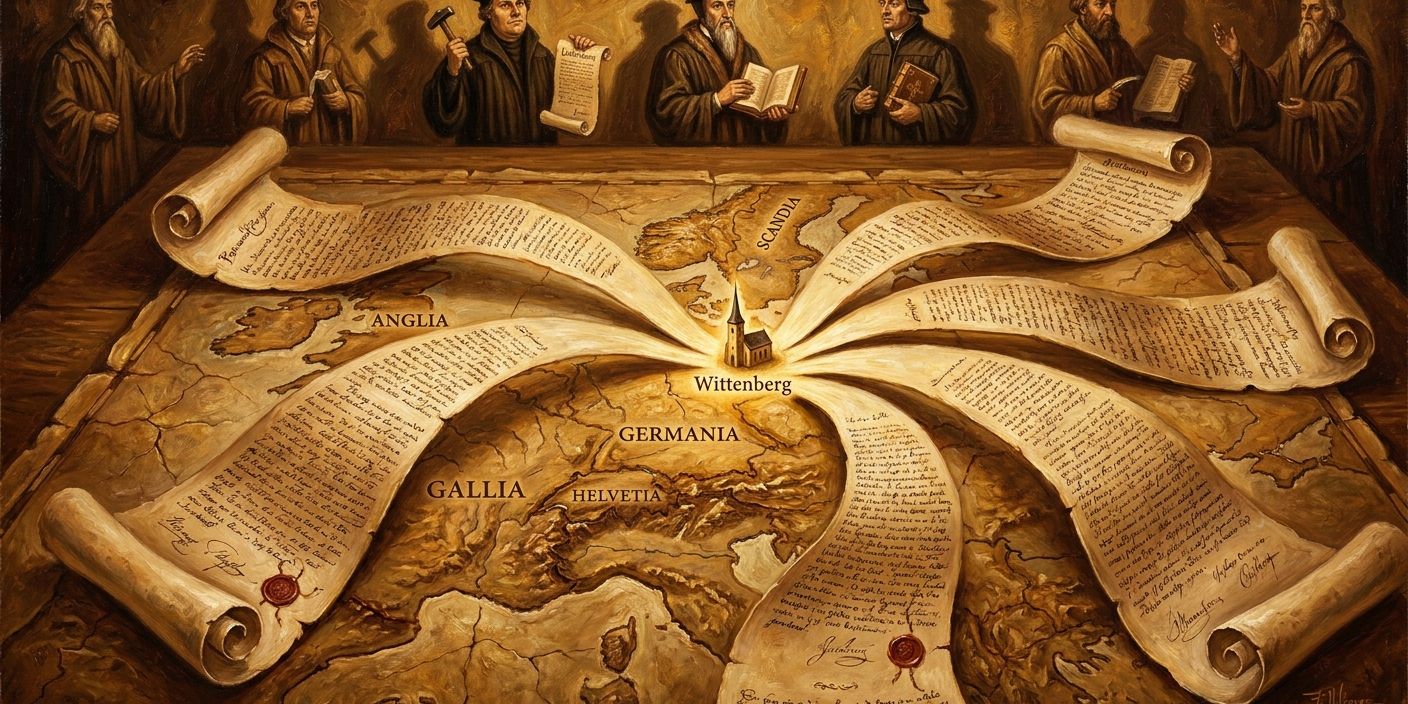
When Martin Luther nailed his Ninety-Five Theses to the church door in Wittenberg in 1517, he could not have anticipated the confessional explosion that would follow. Within a century, virtually every stream of the Reformation had produced one or more formal confessions of faith: Lutheran, Reformed, Anglican, Anabaptist, and eventually Baptist. The question is: why?
The Crisis of Authority
At the heart of the Reformation was a crisis of authority. Rome claimed that the Church — specifically the papacy — was the final arbiter of doctrine. The Reformers denied this, insisting that Scripture alone (sola Scriptura) was the supreme rule of faith. But this immediately raised a new question: if Scripture alone is authoritative, what does Scripture say?
Confessions emerged as the Reformers' answer — a formal declaration of how a particular church understood Scripture on the great questions of doctrine and practice. They were not meant to rival Scripture but to summarize it.
Confessions as Boundary Markers
Confessions also served a sociological function: they distinguished one group from another. The Augsburg Confession (1530) distinguished Lutherans from Rome. The First Helvetic Confession (1536) distinguished the Swiss Reformed from the Lutherans. The Belgic Confession (1561) distinguished the Reformed from both Rome and the Anabaptists.
In an age when theological clarity could mean the difference between life and death — when people were being burned at the stake for their beliefs — knowing exactly what you believed and why was not an academic exercise. It was a matter of survival.
Confessions as Acts of Courage
Many confessions were written in circumstances of great danger. Guido de Brès wrote the Belgic Confession while ministers were being executed in the Spanish Netherlands. The Barmen Declaration was written in 1934 under the shadow of National Socialism. The act of confessing — of saying "we believe this, and we will not say otherwise" — has always required courage.
This is the spirit in which we read the confessions today. They are not merely historical curiosities. They are the testimony of men and women who staked their lives on the truth of what they confessed.