The Barmen Declaration: When the Church Said No to Caesar
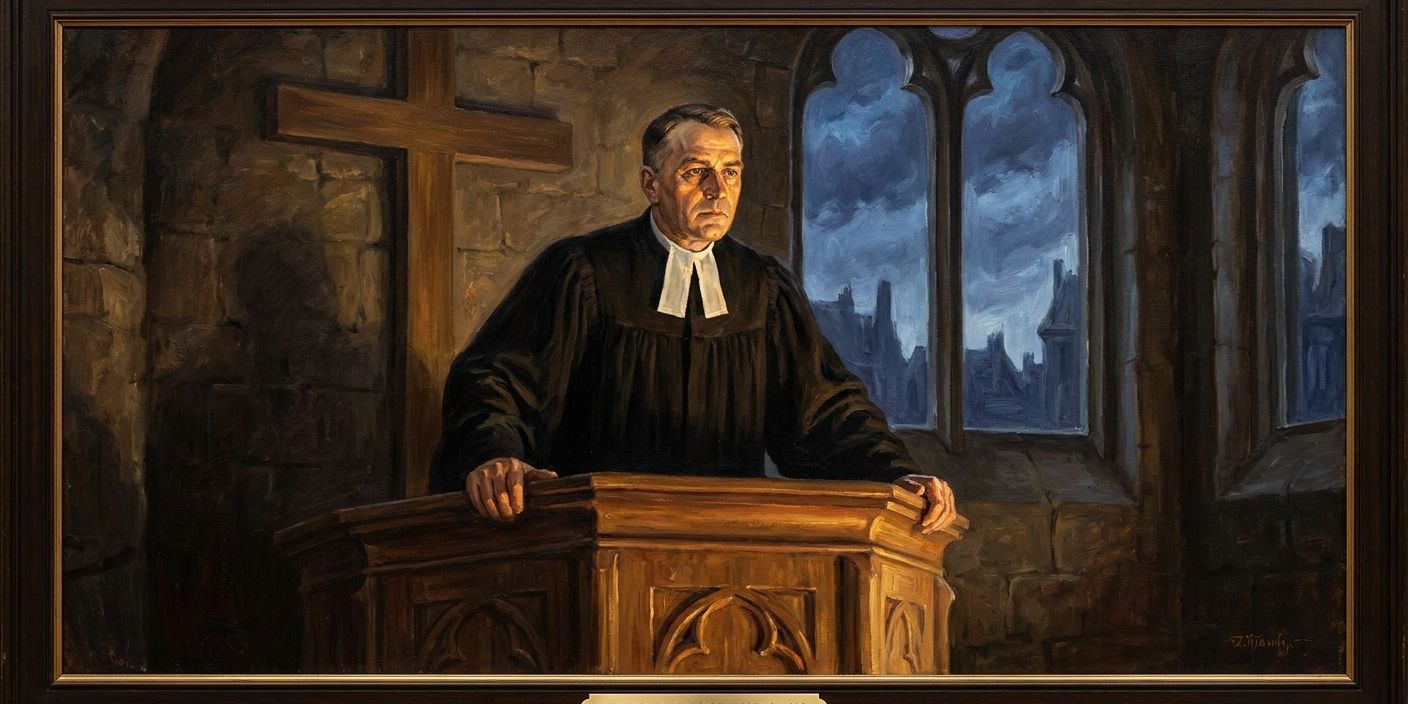
In May 1934, as Adolf Hitler consolidated his grip on Germany and the Deutsche Christen ("German Christians") movement was attempting to bring the Protestant churches under Nazi control, a group of pastors and theologians gathered in Wuppertal-Barmen and did something remarkable: they wrote a confession.
The Context
By 1934, the Nazi government had been in power for just over a year. The Deutsche Christen movement, which blended Protestant Christianity with National Socialist ideology, had gained control of much of the German Evangelical Church. They were attempting to "Aryanize" the church — removing Jewish Christians from positions of leadership, replacing the Old Testament with Germanic mythology, and subordinating the church's theology to the ideology of the state.
In response, a group of confessing Christians — including Karl Barth, who drafted much of the Declaration, and Dietrich Bonhoeffer, who was present in spirit if not in person — gathered to issue a formal theological repudiation of these errors.
The Six Theses
The Barmen Declaration consists of six theses, each beginning with a Scripture quotation, followed by an affirmation of what the Church confesses and a rejection of the contrary error. The most famous is the first: "Jesus Christ, as he is attested for us in Holy Scripture, is the one Word of God which we have to hear and which we have to trust and obey in life and in death."
Against this it declares: "We reject the false doctrine, as though the Church could and would have to acknowledge as a source of its proclamation, apart from and besides this one Word of God, still other events and powers, figures and truths, as God's revelation." This was a direct repudiation of the Nazi claim that the events of 1933 were themselves a form of divine revelation.
Its Enduring Significance
The Barmen Declaration is significant not only as a piece of church history but as a model for confessional Christianity under pressure. It demonstrates that the act of confessing — of saying clearly what the Church believes and what it rejects — is not merely an academic exercise. In certain times and places, it is an act of resistance, a refusal to allow the Church to be co-opted by worldly powers.
In an age when churches face increasing pressure to conform their theology to the demands of the surrounding culture, the Barmen Declaration is a reminder that the Church has been here before — and that faithfulness requires not just private belief but public confession.