The Augsburg Confession: Luther's Bold Stand for the Gospel
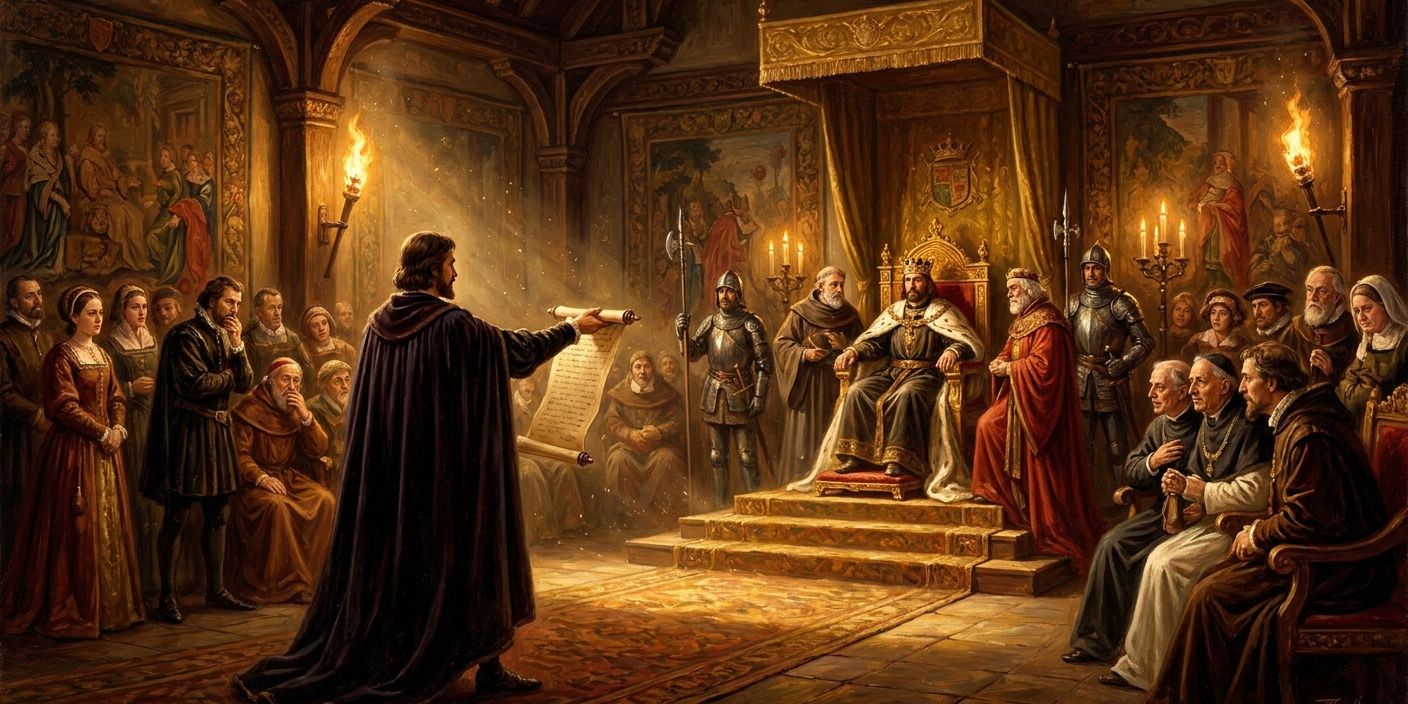
The Diet of Augsburg
In 1530, Holy Roman Emperor Charles V called together the princes of Germany to settle the religious divisions sparked by Martin Luther’s Reformation. Luther himself could not attend — he was still under imperial ban — so the task of defending the evangelical faith fell to Philip Melanchthon, Luther’s colleague and fellow reformer.
Melanchthon’s Masterwork
Melanchthon drafted the Augsburg Confession in a spirit of conciliation, emphasizing agreement with Rome where possible while clearly stating where the Lutherans could not yield. Luther himself reviewed and approved the document, saying he could not have been so mild.
Structure of the Confession
The Confession has two parts. The first 21 articles present Lutheran doctrine: justification by faith alone, original sin, the person of Christ, the Lord’s Supper, baptism, civil government, and more. The final 7 articles describe abuses in the Roman church that had been corrected: communion in both kinds, clerical marriage, private masses, and others.
Justification at the Center
Article 4 states the heart of the Lutheran Reformation: men “cannot be justified before God by their own strength, merits, or works, but are freely justified for Christ’s sake, through faith.” This doctrine of justification by grace through faith was the non-negotiable center of the evangelical cause.
Foundation of Lutheranism
The Augsburg Confession became the foundational confessional document of Lutheran Christianity worldwide. It was later supplemented by Luther’s Catechisms and other documents in the Book of Concord (1580), which together form the full Lutheran confessional standard.
Explore the Confession
Read the full text of the Augsburg Confession at AugsburgConfession.info, and explore the broader Lutheran confessional tradition at LutheranConfession.com.